
Mystery cults · Greece and Rome
Ancient Mysteries
Torches in the night, an oath of silence, an ear of grain shown in a flash of light: a journey into the cults that promised their initiates a better lot, in this life and beyond.
Move the torch to light up the frieze
In the ancient world religion was above all a public matter: sacrifices on the city's altars, festivals of the calendar, processions in which the whole community took part. Beside this visible religion there was another one, nocturnal and reserved, which people entered by personal choice and through a rite of passage. The Greeks called it mystéria, from a root that suggests closing the eyes and the lips: the initiate, the mýstes, was the one who had seen and had to keep silent.
This website tells the story of those cults one by one. We start at Eleusis, the sanctuary of Demeter and Kore where for almost two thousand years Athenians, foreigners and even Roman emperors went in search of hope for the afterlife. We go on with Orpheus and his gold tablets buried in Calabria, with the bacchants of Dionysus and the scandal that shook Rome in 186 BC, with the god Mithras slaying the bull in the soldiers' caves, with Isis of the countless names, with the Phrygian Great Mother who came to the Palatine.
Each entry brings together ancient sources, archaeological finds and the readings of modern scholars, always separating what we know from what we can only guess. Because the fascination of the mysteries lies precisely here: in a secret that, for the most part, has held to this day.
Latest entries
All entries (20)
The mithraea of Ostia
In Rome's harbour town archaeology has uncovered almost twenty mithraea: the mosaic of the seven grades of Felicissimus, the seven spheres, the seven gates. The best place to understand how the cult of Mithras was lived.
The taurobolium
The bull sacrifice of the Great Mother: from a public rite for the emperor's health to a "baptism of blood" in Christian polemic, down to altars proclaiming "reborn for eternity".
The Thesmophoria, the women's festival
Three autumn days when only married women went up to Demeter's sanctuary: piglets thrown into pits, fasting, obscene jokes and the hope of a good harvest.
Sabazios, the Phrygian god of the mysteries
A god from Phrygia and Thrace, honoured with a snake slipped through the robe and with votive bronze hands: Athens mocked him, Rome ended up welcoming him.
Pythagoras and the community of Croton
Silence, rules of life, sacred numbers and a soul that is reborn: the community Pythagoras founded in Magna Graecia worked in many ways like an initiatory brotherhood.
Plutarch's treatise On Isis and Osiris
A priest of Delphi explains the myth of Osiris to a priestess: the fullest ancient account of the god's passion and one of the keys through which the Greeks read Egypt.
The Derveni Papyrus
The oldest European book to survive, saved by chance from a funeral pyre in Macedonia: a philosophical commentary on a poem of Orpheus about the birth of the gods.
The Orphic Hymns
Eighty-seven prayers in verse attributed to Orpheus, each with its own incense to burn: the hymn book of a community of initiates in the Roman imperial age.
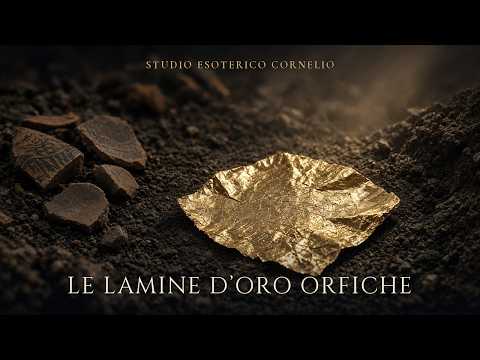
The Orphic gold tablets
Thin gold leaves placed in graves from the fifth and fourth centuries BC onwards: instructions for the soul in the afterlife, between the spring of forgetting and the lake of Mnemosyne.
Apuleius' Metamorphoses
The Golden Ass, the only Latin novel to survive complete: Lucius' fall, the tale of Cupid and Psyche and Book XI, the most vivid account we have of an initiation into the mysteries of Isis.
Kykeon, the drink of Eleusis
Barley, water and pennyroyal: the drink with which the initiates of Eleusis broke their fast. And a bold hypothesis debated since 1978: did it contain a hallucinogen?
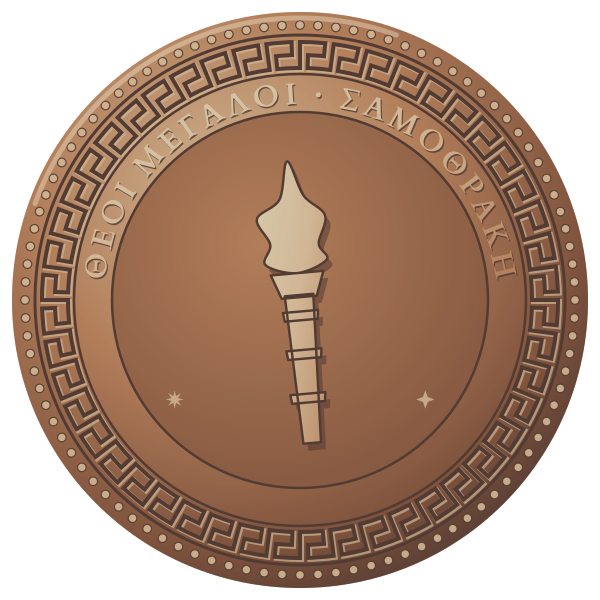
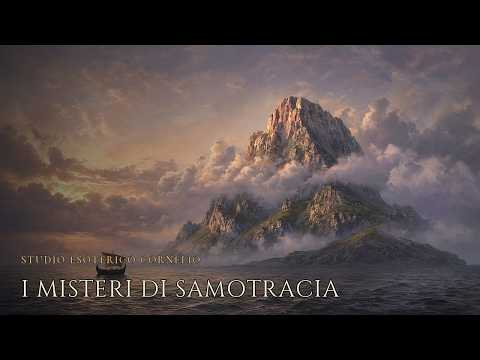
Samothrace and the Great Gods
A sanctuary on a windswept island, gods with mysterious names, initiations open to all and a promise for seafarers: the second great mystery of the Greek world.
Videos from the YouTube channel
All videos (24)Videos by Studio Esoterico Cornelio on the themes of this website. They are in Italian: watch them here or on YouTube, and subscribe to see the next ones.
Subscribe to the channel YouTube channel · Studio Esoterico Cornelio
Explore by theme

Studio Esoterico Cornelio®
This website is an editorial project of Studio Esoterico Cornelio®: the history, symbols and traditions of esotericism, told with care.