
Sources and testimonies
Apuleius' Metamorphoses
The Golden Ass, the only Latin novel to survive complete: Lucius' fall, the tale of Cupid and Psyche and Book XI, the most vivid account we have of an initiation into the mysteries of Isis.
In the second century AD an orator from North Africa, Apuleius of Madauros, wrote a novel in eleven books that ancient readers were already calling The Golden Ass. It is the only Latin novel that has reached us complete, and it is also the text that tells us most about what an initiate into the mysteries actually felt: after a thousand misadventures, its hero ends up standing before Isis.
A philosopher on trial for magic
Apuleius was a brilliant intellectual, educated in Carthage, Athens and Rome, a Platonist philosopher and a successful public speaker. Around 158-159 he was tried at Sabratha on the charge of having won over a rich widow, Pudentilla, by magic. He defended himself with a speech that survives, the Apology, and in it he declares that he had been initiated into many cults in Greece and that he kept at home the sacred objects he had received, wrapped in a linen cloth. Magic, mysteries and philosophy were part of his life before they were part of his novel.
The fall of Lucius
The hero, Lucius, is a young Greek consumed by curiosity. In Thessaly, the land of witches, he spies on his hostess as she rubs herself with an ointment and turns into an owl. He wants to try it too, picks the wrong jar and becomes an ass, a human mind trapped in the body of a beast. To be healed he would only need to eat roses, but fate drags him far away: robbers, millers, wandering priests of a Syrian goddess, cruel masters. The world seen from below, with human eyes and the back of a pack animal, is one of the book's great inventions.
Cupid and Psyche
At the centre of the novel, in the robbers' cave, an old woman tells the tale of Cupid and Psyche: the girl who marries an invisible husband, gives in to curiosity, loses him and must win him back through trials imposed by Venus, down to a descent into the underworld. It is Lucius' own fault, curiosity, told as a fairy tale; and Platonist readers, from the Renaissance onwards, have read in it the soul's journey towards divine love.
The book of Isis
In the eleventh book Lucius is on the beach at Cenchreae, near Corinth, under the full moon. He purifies himself in the sea and prays to the queen of heaven. Isis rises from the waves and introduces herself with a long series of names: for the Phrygians she is the Mother of the gods, for the Athenians Minerva, for others Venus, Diana, Proserpina, Ceres, Juno, Hecate; but her true name, she says, is Queen Isis. The next day, during the procession that opens the sailing season, a priest offers Lucius a garland of roses. The ass eats them and becomes a man again in front of the crowd.
An initiation both told and withheld
Lucius asks to be initiated. After ten days of abstinence, a ritual bath and instruction from the sacred books, he enters the sanctuary at night. What happened there, he writes, he cannot say; yet he says enough. He approached the boundary of death, crossed the threshold of Proserpina, was carried through all the elements, saw the sun shining with a brilliant light at midnight and worshipped the gods below and above face to face. At dawn he is shown to the faithful dressed like the Sun, a torch in his hand and a crown of palm leaves on his head. In Rome two further initiations will follow, one of them into the mysteries of Osiris.
Why it matters
It is a novel, not a record, and at one point the narrator lets slip that he comes "from Madauros", like the author. But Book XI is written in a different, serious and almost devout tone, and its ritual details match what we know from inscriptions and images of the cult. For anyone studying the mysteries of Isis, and ancient mysteries in general, it remains an unrivalled source: the only first-person account of an initiation, with the same blend of revelation and silence found at Eleusis.
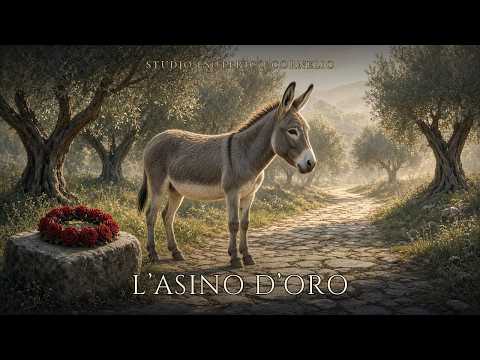
Watch the video
Sources and further reading
- Apuleius, Metamorphoses, Book XI
- Apuleius, Apology 55-56
- Augustine, City of God XVIII 18
- J. G. Griffiths, Apuleius of Madauros. The Isis-Book (1975)
- W. Burkert, Ancient Mystery Cults (1987)
Read next
The Orphic gold tablets
Thin gold leaves placed in graves from the fifth and fourth centuries BC onwards: instructions for the soul in the afterlife, between the spring of forgetting and the lake of Mnemosyne.

The Orphic Hymns
Eighty-seven prayers in verse attributed to Orpheus, each with its own incense to burn: the hymn book of a community of initiates in the Roman imperial age.

The Derveni Papyrus
The oldest European book to survive, saved by chance from a funeral pyre in Macedonia: a philosophical commentary on a poem of Orpheus about the birth of the gods.
